


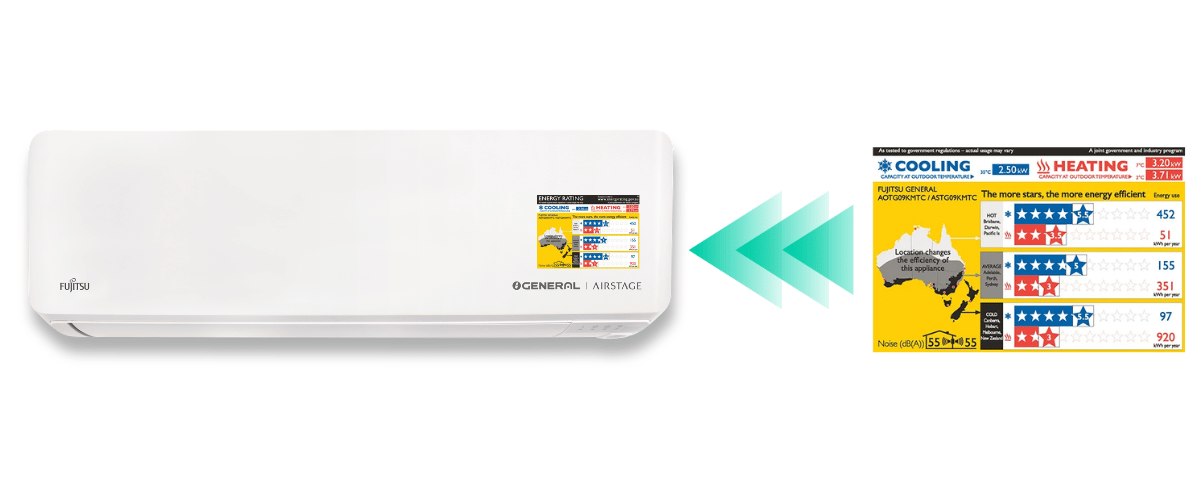
Understanding Zoned Energy Rating Labels for GENERAL Air Conditioners
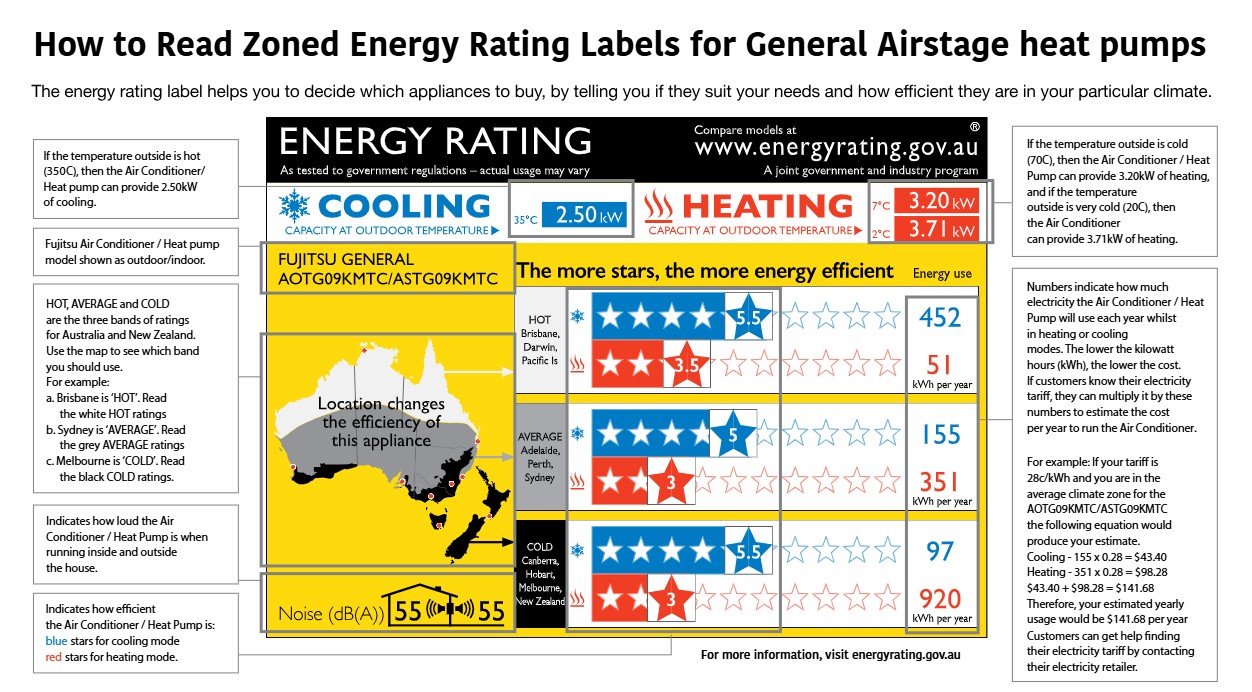
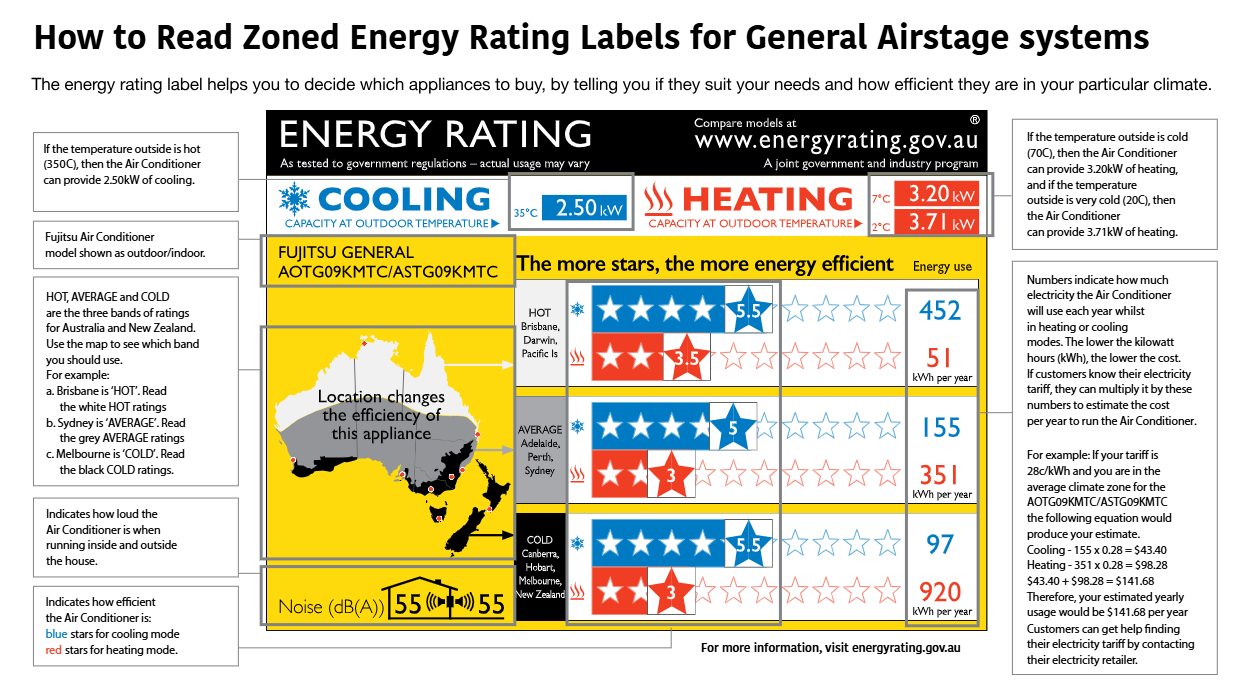
The air conditioner energy rating for GENERAL (formally Fujitsu) systems is displayed in the Zoned Energy Rating Label (ZERL). This label helps you make more informed decisions when choosing an energy-efficient system.
The ZERL is designed to show how efficiently an air conditioner performs under different climate conditions. Rather than providing a single rating, it offers a seasonal efficiency breakdown across three climate zones — HOT, AVERAGE and COLD — giving you a more accurate understanding of real-world performance.
The label includes:
Star ratings for both cooling and heating efficiency
Annual energy consumption (kWh) to indicate running costs
Performance data tailored to different climate conditions
By using the ZERL air conditioner star rating, you can compare systems more effectively, choose a unit suited to your location and improve overall air conditioner efficiency while managing energy use and long-term costs.
Understanding Air Conditioner Star Ratings
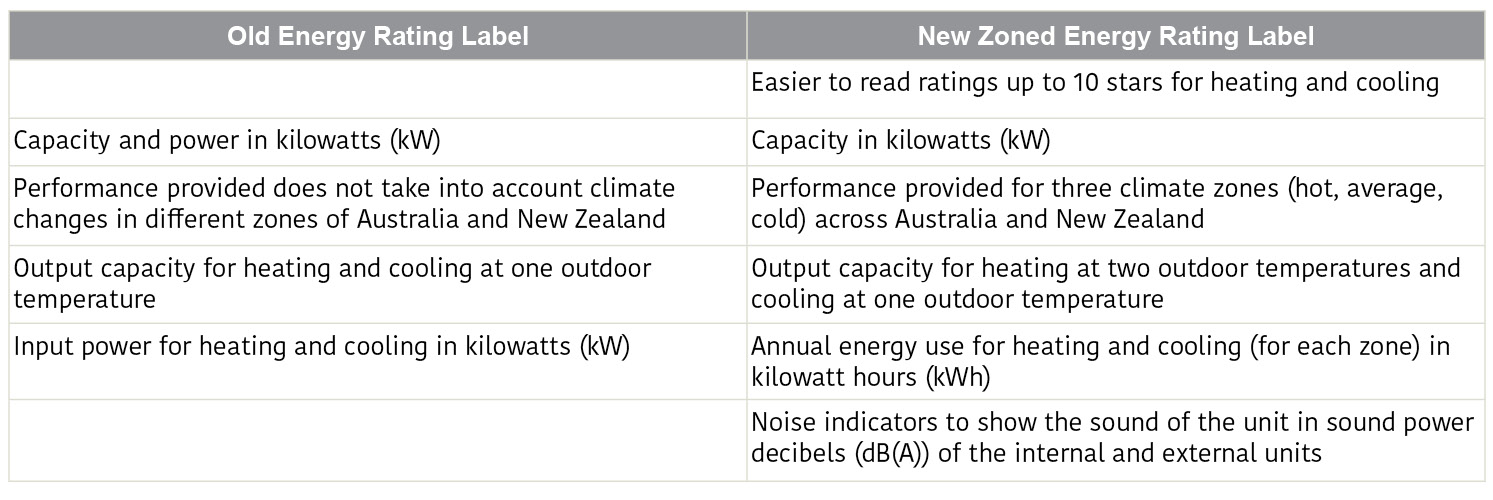
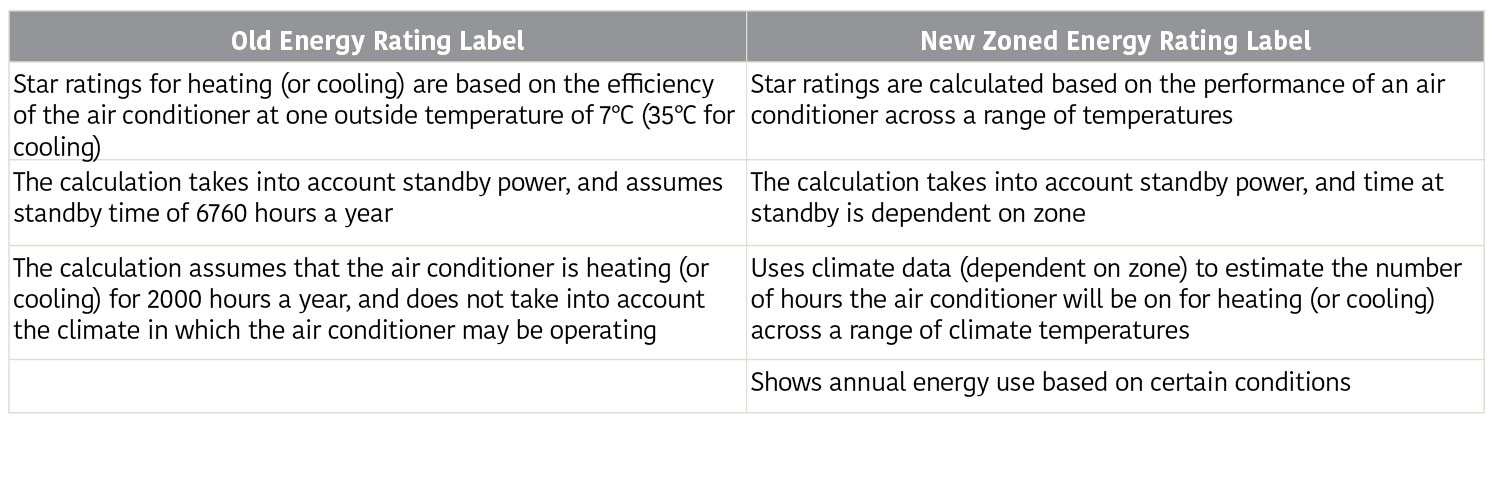
Understanding the difference between the old Energy Rating Label (ERL) and the NEW Zoned Energyy Rating Label (ZERL)
Key Features
Performance Calculations
How to use the Zoned Energy Rating Label for GENERAL air conditioners
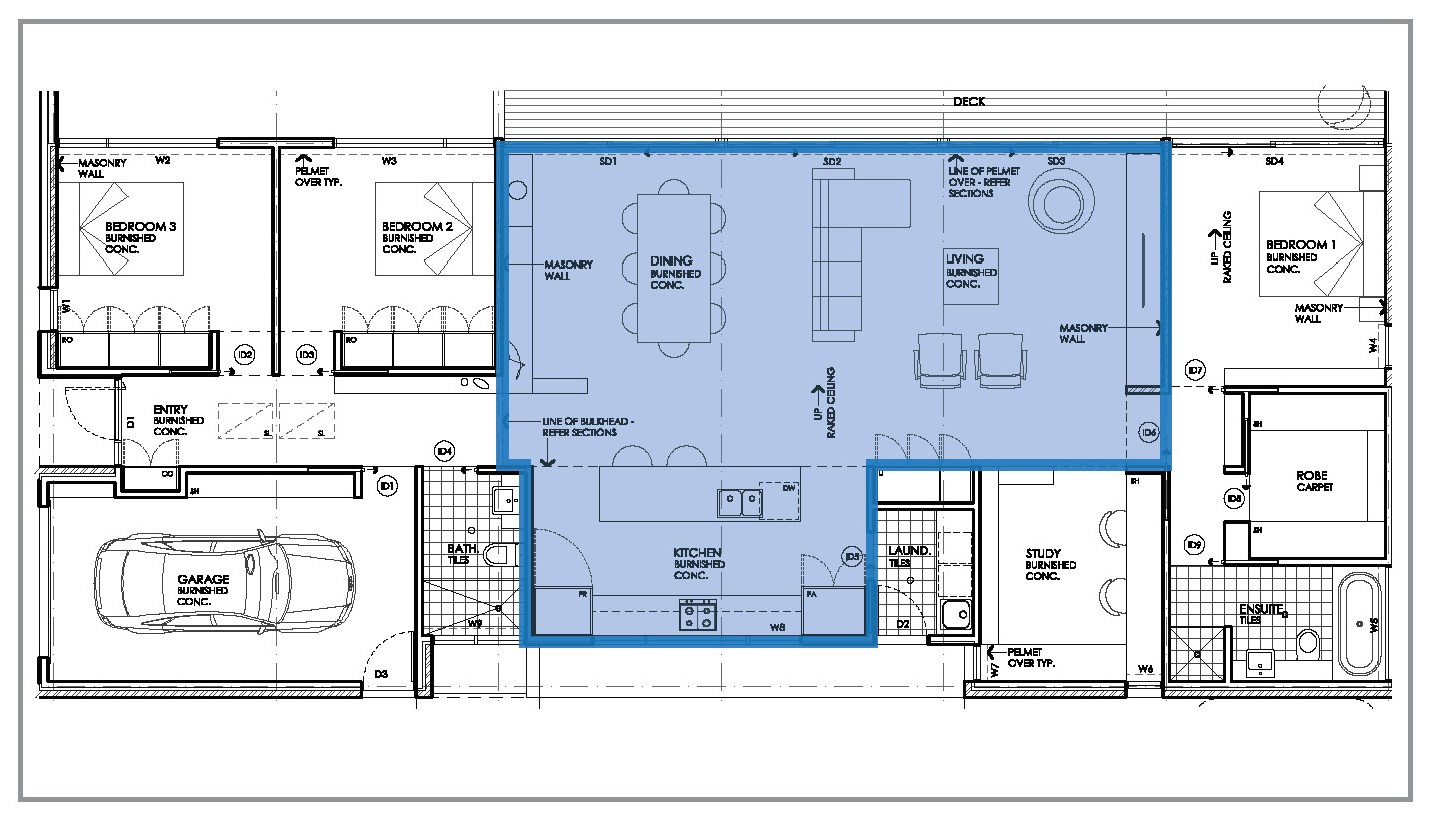
Step 1: Determine the right size for your space
Start by identifying the correct size air conditioner for your home. For example, a family with a 3-bedroom home may need a 7 kW unit for an open-plan living area, based on advice from a retailer or installer. Choosing the right size is essential for maximising your air conditioner's energy rating, performance and efficiency.
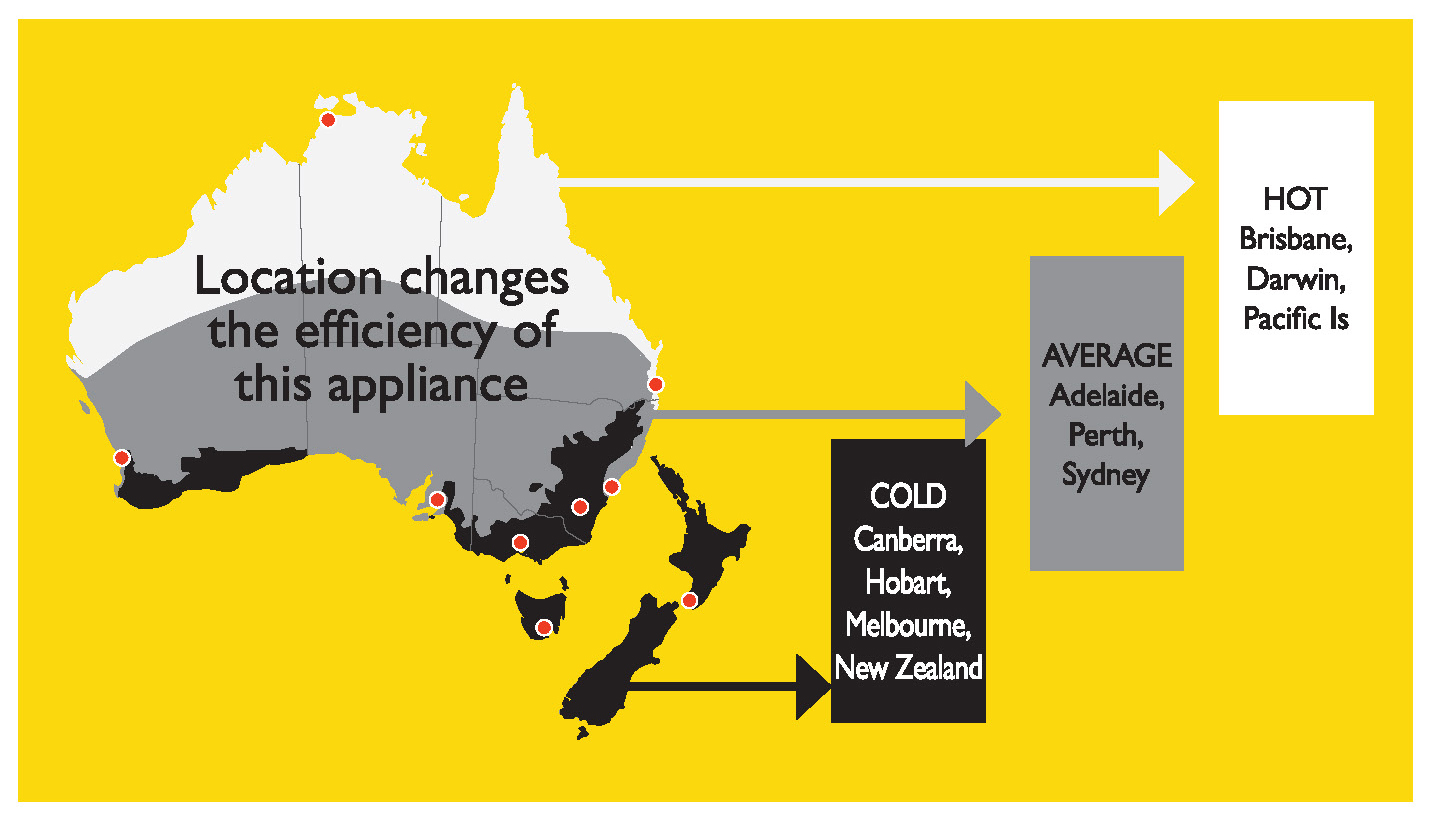
Step 2: Identify your climate zone
Next, determine which climate zone you’re in. For instance, a family living in Perth falls within the 'average' zone. This means they should refer to the star ratings and energy consumption data shown in the grey ‘average’ zone section of the energy rating air conditioner label.
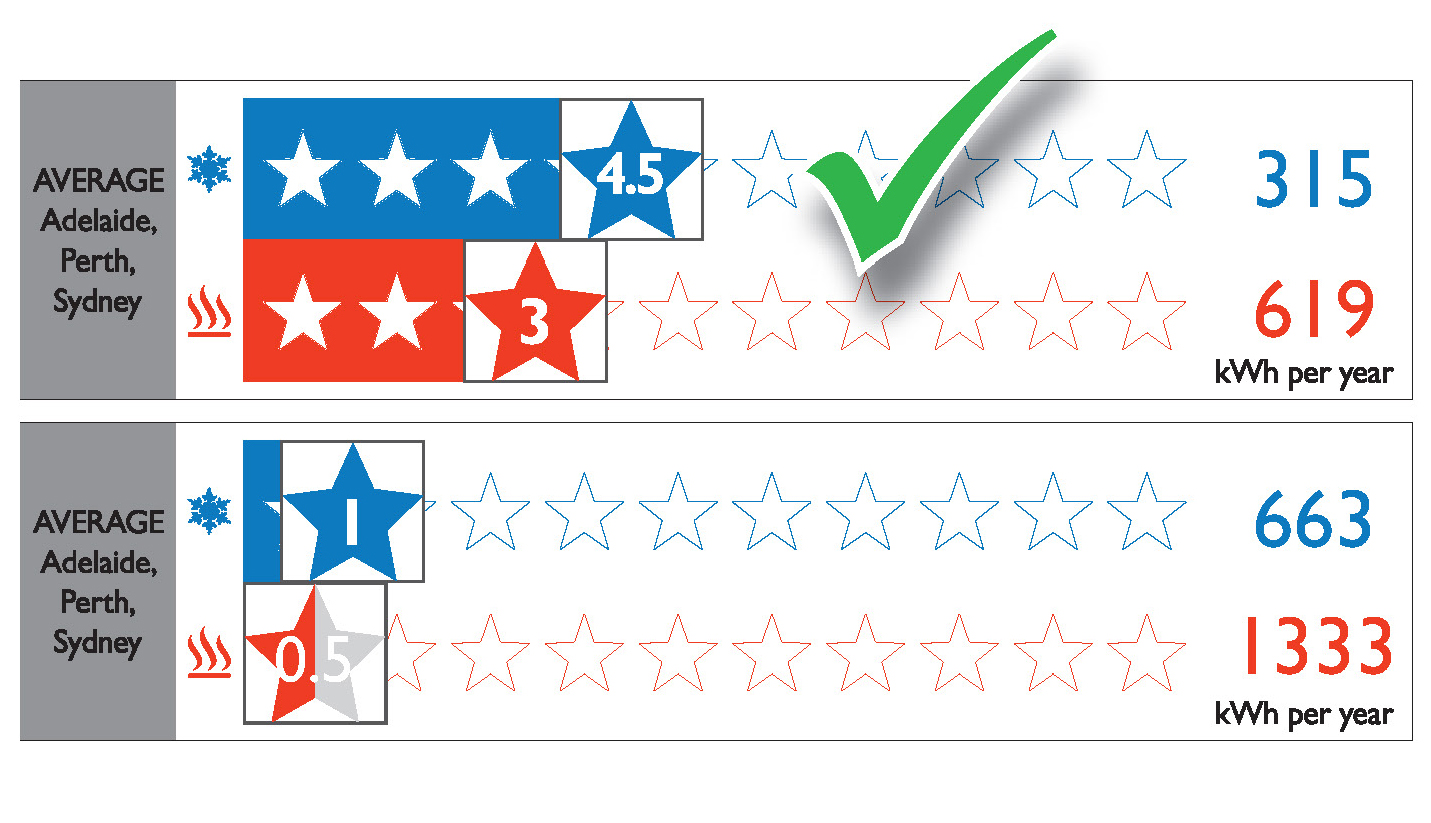
Step 3: Compare star ratings and energy use
Compare the air conditioner star rating and annual energy consumption of different units. When comparing a 4 star energy rating air conditioner or a 5 star energy rating air conditioner to a 2 star energy rating unit, the higher-rated system will typically use less energy and cost less to run over time. Choosing higher, such as a 5 star air conditioning system generally indicates better efficiency.
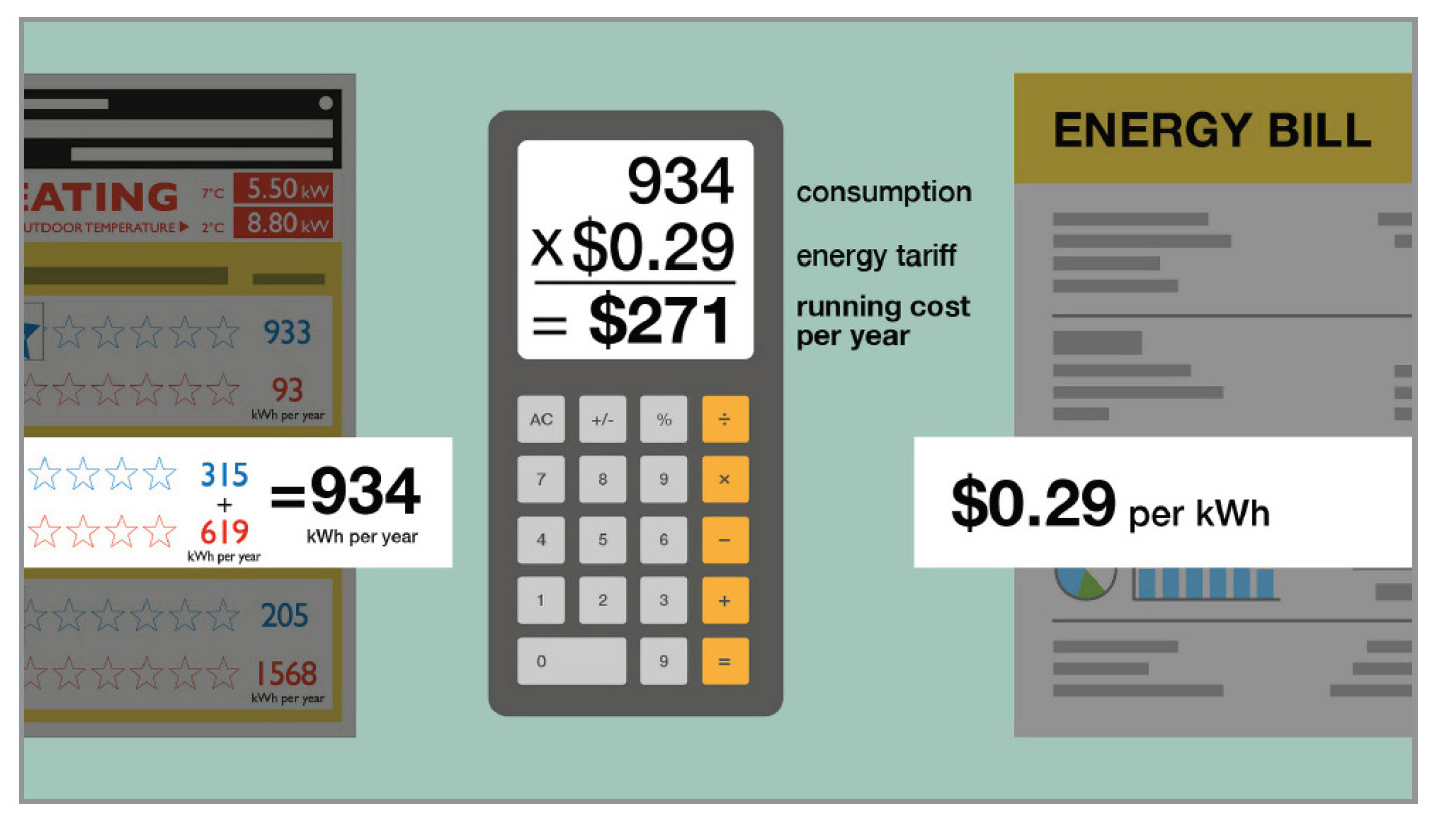
Step 4: Estimate running costs
Use the energy consumption figures on the label to estimate annual running costs.
For example, based on an electricity tariff of $0.29 per kWh, a family may estimate yearly running costs of around $271. This makes the air conditioner energy rating a valuable tool for understanding long-term expenses.
Common Questions
Why does the energy rating of an air conditioner matter?
The air conditioner star rating chart provides detailed information about how much energy a system is likely to use based on your location. It helps consumers compare systems and choose a more efficient option, ultimately reducing energy bills and improving overall performance.
The label reflects annual energy use, giving a more realistic picture of how an air conditioner will perform throughout the year.
Can I compare old and new star ratings?
No. The air conditioner energy rating on older labels cannot be directly compared with the ZERL.
Previous ratings were based on performance at a single temperature, while the current energy rating system reflects seasonal performance across different conditions. This provides a more accurate representation of real-world efficiency.
How loud is the noise level on the label?
Noise levels are measured in decibels (dBA) with the unit operating at full capacity in cooling mode. For comparison:
30 dBA: Quiet home environment
50 dBA: Inside a quiet car
60 dBA: Normal conversation
75 dBA: Vacuum cleaner
In everyday use, your air conditioner will usually operate at a lower noise level than what is shown on the label.
What Does a 5 Star Air Conditioner Rating Mean?
A 5 star energy rating air conditioner represents a high level of efficiency, meaning the system can deliver strong cooling or heating performance while using less energy. In practical terms, 5 star air conditioning systems are designed to provide consistent comfort with reduced running costs compared to lower-rated units.
Under the ZERL, the air conditioner star rating reflects seasonal efficiency rather than performance at a single temperature. This gives a more accurate indication of how the system will perform throughout the year.
A 5 star energy rating air conditioner can:
Use less electricity for the same level of comfort
Reduce long-term energy bills
Deliver more consistent temperature control
It’s important to note that star ratings can vary by climate zone. A unit may achieve a 5 star air conditioner energy rating in one zone but a lower rating in another, depending on local conditions. This is why it’s essential to refer to the relevant zone when comparing systems.
Comparing a 4 Star Air Conditioner vs 5 Star Air Conditioner in Energy Ratings
When comparing systems, even a one-star difference in the air conditioner energy rating can have a noticeable impact on usage and running costs.
Key differences:
Rating | Efficiency | Energy Use | Running Costs |
5 star rating air conditioner | High efficiency | Lower energy consumption | Lower long-term costs |
4 star rating air conditioner | Moderate efficiency | Higher energy use than a 5 star | Higher running costs over time |
A 5 star is typically more efficient than an air conditioner with a 4 star energy rating because it requires less power to achieve the same heating or cooling output. Over time, this can translate into meaningful savings, particularly in households where the system is used regularly.
While 4 star energy rating air conditioners may have a lower upfront cost, a 5 star air conditioner often provides better value in the long term due to reduced energy consumption.
Find the Right Air Conditioning Solution for Your Home
Choosing the right system doesn’t have to be complicated. Use the GENERAL Assist Product Selector Tool to find a suitable air conditioning solution tailored to your home. By entering your room sizes and layout, the tool helps guide you towards the most efficient option for your space.