10 kW Air Conditioner Guide: Is it the Right Size for Your Home?
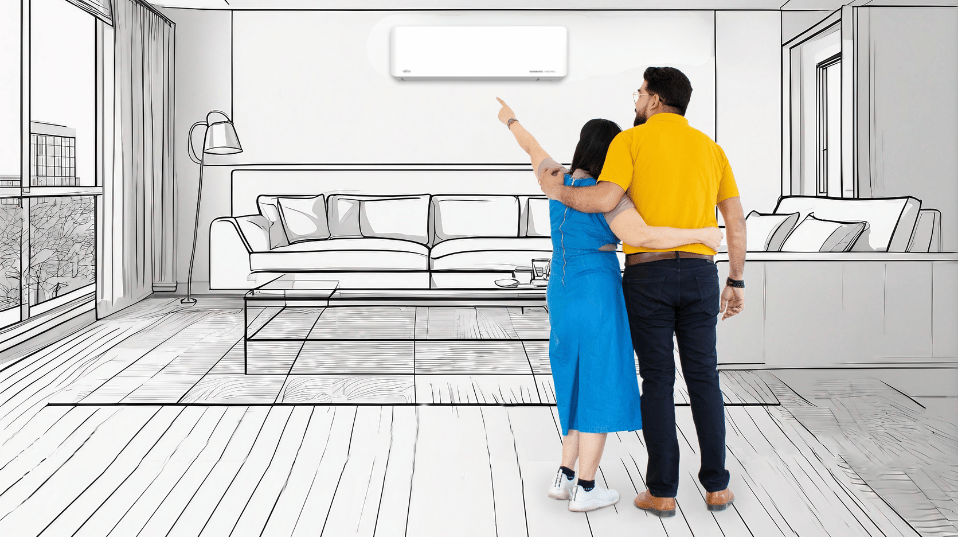
A 10 kW aircon is usually suitable for larger open-plan living areas or smaller homes, depending on insulation, ceiling height, window exposure and climate zone. It can provide strong heating and cooling capacity without moving up to a larger 12 kW system.
Australian homes can be subject to very different conditions, from hot, dry inland summers to humid coastal climates and cooler winters in the south. This means air conditioner sizing is not the same for every home.
So, how do you know if a 10 kW is right for you?
For many homes, a 10 kW aircon is a practical choice when you need reliable comfort across a large shared space or a compact home. But the right fit still depends on crucial aspects of your home, like how much sun it gets and how hard the system needs to work throughout the year.
Key Takeaways
A 10 kW aircon should be enough for a spacious room that needs continuous heating and cooling.
Room size is only one factor. Insulation, ceiling height, windows and climate all play a part in determining capacity requirements.
Split systems at this size suit large single zones, while ducted systems are better for compact homes needing broader coverage.
The running costs have more to do with how efficiently it is operated rather than its 10 kW rating.
Professional sizing and installation prevent poor performance, wasted energy and system stress.
What Room Size Does a 10 kW Air Conditioner Cover?
As a general rule of thumb, a 10 kW aircon may be suitable for spaces of approximately 65-80 m² in normal Australian conditions. However, this can vary significantly depending on the home and local conditions.
A 10 kW unit is ideal for a large open-plan kitchen and living area, small 2-bedroom apartments with a single zone or a medium-sized home office with high sun exposure, where a lower-capacity unit may struggle to maintain the desired temperature.
The right size can change depending on the style of home and location. Ceilings higher than 2.7 m can increase the required capacity by around 10-15%. Poor insulation can increase heat gain in summer and heat loss in winter. West-facing windows will generally increase cooling demand, especially in the afternoon. Also, homes in tropical northern climates require more cooling capacity than homes in temperate southern climates.
Use the table below as a starting guide to understand where a 10 kW air conditioner is likely to suit, or whether a smaller or larger system may be more appropriate.
| Space type | Approx. floor area | 10 kW suitable? |
| Large open-plan living/kitchen | 60-80 m² | Often suitable, depending on conditions |
| Small 2-bedroom home (single zone) | 65-75 m² | Potentially suitable with professional assessment |
| Medium family home (whole home) | 90-120 m² | May require a larger or differently configured system |
| Single large bedroom | 25-35 m² | A smaller capacity system would generally be more appropriate |
| Space with high ceilings or west-facing windows | Varies | Professional assessment recommended |
Note: These figures are a general guide only and do not guarantee coverage for every home or room. Professional sizing is recommended before selecting an air conditioner.
If your space is approaching 90–100 m², a larger capacity system or a different air conditioning configuration may be required, depending on the home's design and conditions.
9.5 kW Split System vs 10 kW Ducted: Which Should You Choose?
When choosing between a large split system and a ducted air conditioning system, the main consideration is how much of your home you want to heat and cool.
At 10 kW, the right choice depends on whether you need to heat and cool one large area or a smaller whole home. A 10 kW split system, also known as a single room AC, is best suited to a large room or open-plan zone, such as a combined living, dining and kitchen area. It’s generally cheaper to install and quicker to set up than a ducted system, making it a practical option when only part of the home needs air conditioning. Wall-mounted units at this capacity sit at the upper end of the split system range.
For example, GENERAL Australia's current Lifestyle range includes a 9.5 kW cooling model designed for large rooms. The system provides 9.5 kW of rated cooling capacity and 10.3 kW of rated heating capacity.
A split system can be a practical option when you primarily want to air condition one large area rather than the entire home.
A 10 kW ducted system is better suited to smaller homes, generally up to around 3 bedrooms or if you want an entry-level whole-home solution. It can work well in a small house but may be overextended in a larger floor plan, particularly if the insulation is poor or there’s a lot of heat gain in the rooms.
GENERAL Australia offers a range of ducted solutions designed for different home sizes, layouts and installation requirements.
To air-condition one large space, a split system is usually the practical choice. If you’re in a smaller home and need full coverage, then a ducted system of 10 kW might be a good option, but the suitability of the system needs to be assessed by a qualified installer.
How Much Electricity Does a 10 kW Air Conditioner Use?
A 10 kW air conditioner does not necessarily consume 10 kW of electricity.
The 10 kW figure generally refers to the system's heating or cooling capacity — in other words, how much heating or cooling the system can deliver.
The amount of electricity consumed is referred to as input power.
Input power is usually lower than the system's heating or cooling output, but actual electricity consumption varies depending on the model and operating conditions.
For example, GENERAL Australia's 9.5 kW Lifestyle split system has:
Rated cooling capacity: 9.5 kW
Rated cooling input power: 2.72 kW
Maximum cooling input power: 4.2 kW
This demonstrates why cooling capacity and electricity consumption should not be confused.
As an example only, if an air conditioner consumed an average of 3 kW of electricity and operated for four hours per day, with electricity costing $0.30 per kWh:
3 kW × 4 hours × $0.30 = $3.60 per day
This is an illustrative example only.
Actual running costs can vary depending on:
Electricity tariffs
Outdoor temperature
Indoor temperature settings
Insulation
Room size
How long the system operates
System efficiency
How hard the air conditioner needs to work
Zoned Energy Rating Labels (ZERL) are one of the most reliable ways to compare efficiency between models. As a guide, each degree of cooling set below 24°C or heating above 21°C can add around 5-10% to energy use.
Installation Considerations for a 10kW Air Conditioner
Most 9.5 kW split systems use standard single-phase power, so installation is straightforward for many Australian homes. The outdoor unit is larger than mid-range models at this capacity and requires plenty of clearance for airflow, a stable mounting location and easy access for servicing. A licensed installer should assess the site before purchase.
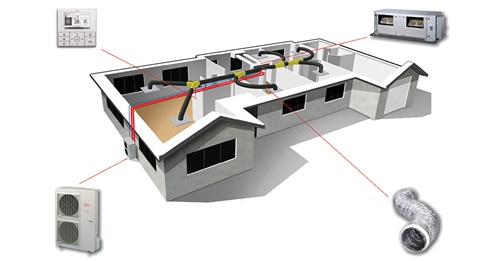
A 10 kW ducted system is more complex to install than a split system. Ceiling cavity access, duct runs, outlet placement and zone control wiring all need to be planned properly. Installation typically takes 1-2 days, depending on the home.
All installations must be carried out by a licensed refrigeration mechanic. Don’t try to install the system yourself.
GENERAL Australia 10 kW Air Conditioner Models
These are the 9.5 kW split system models and 10 kW ducted system models we currently have available at GENERAL Australia.
| Model | Capacity | System type | Descriptor |
| SET-ASTH34KMTD-NXT | 9.5kW or closest equivalent | Split | Suitable for large open-plan living areas |
| ARTH36KHTA | 10kW or closest equivalent | Ducted | Suitable for compact whole-home comfort |
Not sure which 10 kW aircon model suits your home? Use the GENERAL Assist Tool to get a personalised recommendation.
FAQ's
Is a 10 kW air conditioner the same as a 10 kW ducted system?
No. 10 kW is the cooling or heating output capacity. Both split-system and ducted air conditioners come in 10 kW, but they’re suited to different applications depending on whether you need one-zone comfort or whole-home coverage.
What is the difference between a 10 kW and 12 kW air conditioner?
A 12 kW air conditioner has a higher heating or cooling capacity than a 10 kW system.
This may make it suitable for larger spaces or homes with higher heating and cooling requirements.
However, the right system size depends on more than floor area. Insulation, ceiling height, windows, orientation and climate can all affect the capacity required.
Professional sizing is recommended to ensure the system is appropriate for your home.
Can a 10 kW air conditioner heat as well as cool?
Many 10 kW aircon systems are reverse cycle, meaning they can provide both heating and cooling.
GENERAL Australia's residential reverse-cycle systems can provide year-round climate control, allowing homeowners to cool their home in summer and heat it during cooler weather.
Do I need three-phase power for a 10 kW air conditioner?
It depends on the specific model.
Some large-capacity air conditioning systems operate using single-phase power, while others require three-phase power.
For example, GENERAL Australia's current
10 kW aircon, R32 High Static ducted three-phase model requires a 400 V, three-phase power supply.
Always check the electrical requirements of your chosen model and confirm them with your installer before purchasing the system.

Helpful Articles
Helpful articles and tips on how to keep your home and office comfortable all year round.
.tmb-tmb420.jpg?sfvrsn=5c4be2e1_1)